
When you compare spider veins vs varicose veins, the clearest difference is usually their size and shape. Spider veins tend to look like fine red, blue, or purple lines near the skin. Varicose veins are often larger, raised, twisted veins that may come with aching, heaviness, swelling, or cramps. Yet appearance alone cannot confirm what is happening beneath the skin.
Request a personalized vein consultation in Glen Rock or Edison.
Both types of visible veins deserve a thoughtful look, especially when they are new, changing, or linked with leg symptoms. A vein specialist can review your symptoms, examine your legs, and use an ultrasound when needed. This helps distinguish a surface concern from an underlying circulation issue and guides a care plan that fits your needs.
Below is a practical comparison of how these veins may look and feel. Why they form, when to seek an evaluation, and which treatment options a physician may discuss.
Spider veins and varicose veins both affect your blood flow. They look different and cause different issues. Many people see them on their legs and wonder which one they have. They share some causes, but they are not the same thing. Knowing the facts helps you take the right steps for your health.
You cannot find the full cause by looking alone. Your skin may show signs of vein issues, but a doctor must check for deeper roots. A visual check is a good start, but it is not a full test. Our team uses on-site tools like blood flow mapping to find the real issue. This helps us see if your valves are working well.
Spider veins are small and stay near the skin surface. They often look like red, purple, or blue webs or sunbursts. These veins are usually flat and do not stick out. Most people only notice them because of their bright colors. You usually cannot feel them when you run your hand over your skin.
Spider veins can show up in many spots. While they are often on the legs, they also appear on the face. Many people find them on their nose or cheeks. They affect small blood vessels like capillaries and venules. If you notice new spider veins, they may be a sign of deeper trouble in your legs.
Varicose veins are much larger and sit deeper in the leg. They look like thick, twisted ropes under your skin. These veins bulge out and feel bumpy to the touch. They often look blue or green because of their size and depth. They most often form in the legs, feet, and ankles.
| Feature | Spider Veins | Varicose Veins |
|---|---|---|
| Look | Flat webs or branches | Bulging, rope-like cords |
| Common Color | Red, blue, or purple | Blue, green, or purple |
| Typical Size | Small capillaries | Large and swollen |
| Health Risk | Mostly cosmetic | Can lead to leg ulcers |
| Pain Level | Usually painless | Aching, pain, or cramps |
| Diagnosis | Visual check | Ultrasound and mapping |
Most spider veins are a cosmetic worry. They rarely cause big health risks or poor blood flow. Still, spider veins can cause mild itching or a burning feel. They do not always turn into larger vein issues. But they can be a sign that you need a check-up.
Varicose veins are often a bigger medical issue. They happen when vein walls get weak and valves do not work well. This causes blood to pool in the leg instead of moving to the heart. This issue is called chronic venous insufficiency. It can lead to skin changes, leg ulcers, or blood clots if left alone.
If you have varicose veins, you may feel many symptoms. Your legs might feel heavy, tired, or sore. You may also notice swelling or leg cramps at night. We offer many ways of treating spider and varicose veins. These treatments use small steps to close the bad veins and help your blood flow better.
Many things can cause these vein issues. Standing or sitting for a long time can put pressure on your legs. Age and weight also play a big role. Women are more likely to get them, mostly during pregnancy. Moving more and raising your legs can help, but a doctor can find the best plan for you.
Visible veins can vary from person to person. Their color, size, location, and symptoms offer useful clues, but they do not provide a diagnosis on their own. Some people also have both spider veins and varicose veins in the same leg.
Spider veins are small vessels that sit close to the skin. They may look like thin branches, webs, or short clusters. Their color may be red, purple, or blue. They are generally flat, so you often cannot feel them when you run a hand over the area.
Many spider veins do not cause symptoms. Some people notice mild burning, itching, or tenderness. Although they are often treated as a cosmetic concern, spider veins on the legs can sometimes appear alongside deeper vein problems. That is one reason an evaluation can be helpful before choosing treatment.
Varicose veins are larger veins that may bulge above the skin. They can look twisted, rope-like, or lumpy. They most often appear on the legs, feet, or ankles. Because they are raised, you may be able to feel them.
Varicose veins are more likely to come with leg symptoms. These may include aching, throbbing, heaviness, fatigue, swelling, itching, or nighttime cramps. Symptoms can become more noticeable after long periods of standing or sitting. Skin near the ankle may also change over time in some people.
A small surface vein does not always mean there is a deeper circulation problem. In the same way, the size of a raised vein does not tell a physician everything about its cause. Symptoms, medical history, a physical exam, and imaging all add context.
Pay attention to patterns. Note whether discomfort gets worse later in the day, whether one leg swells more than the other, and whether rest or leg elevation helps. Sharing these details can help your physician decide if further testing is appropriate.
Spider veins and varicose veins can share several risk factors, but their causes are not always identical. Veins in the legs work against gravity to return blood toward the heart. Small valves inside the veins help keep blood moving in the right direction.
When vein walls or valves become weak, blood may pool instead of moving upward as efficiently. Pressure can then build within a vein. This process can contribute to enlarged, twisted varicose veins and may be linked with chronic venous insufficiency.
Spider veins affect smaller vessels near the skin. They may develop from changes in those small vessels, and they do not always signal poor circulation. Still, a cluster of surface veins can coexist with valve problems in deeper veins. A visual check alone cannot show the difference.
Family history can affect the chance of developing visible veins. Age, pregnancy, weight changes, and long periods of standing or sitting may also play a role. Jobs that keep people on their feet for much of the day can make leg symptoms more noticeable.
Having one or more risk factors does not mean you will develop a specific vein condition. It also does not determine which treatment, if any, is right for you. Your physician considers the full picture.
The legs contain a connected network of deep and surface veins. Changes in one part of that network can affect pressure elsewhere. As a result, a person may see fine spider veins near a larger varicose vein or in another part of the leg.
This overlap is why treating only what is visible may not always address the source of symptoms. An exam and, when appropriate, Blood Flow Mapping and Circulation Ultrasound can help show how blood is moving through the leg.
Spider veins are often mainly a cosmetic concern, while varicose veins are more often linked with symptoms or an underlying circulation issue. That distinction is useful, but it is not absolute. A professional evaluation is the safest way to understand your specific veins.
Consider scheduling an evaluation if visible veins bother you, keep spreading, or occur with aching, heaviness, cramps, itching, or swelling. You do not need to wait for severe pain. An early conversation can clarify whether monitoring, self-care, or treatment may be appropriate.
A routine visit is also helpful if symptoms interfere with work, exercise, sleep, or daily comfort. Teachers, healthcare workers, first responders, and others who spend long hours standing may notice symptoms build through the day.
Seek prompt medical guidance for sudden one-sided swelling, warmth, redness, marked tenderness, a sore that does not heal, or bleeding from a vein. Chest pain or sudden shortness of breath requires emergency care. These symptoms should not be self-diagnosed as a routine vein issue.
Skin changes near the lower leg or ankle also deserve attention. Darkening, thickening, irritation, or a wound may be associated with ongoing venous pressure. A physician can assess the area and determine the right next step.
It is reasonable to seek care because you dislike the look of spider veins. Even when appearance is the main concern, an evaluation helps match the treatment to the vessel and your goals. It also gives your physician a chance to look for symptoms or patterns that may need more study.
Coverage varies by plan and reason for care. NJ Vein Specialists accepts PPO insurance plans, but patients should confirm coverage and medical-necessity requirements with their insurer. Cosmetic treatment may be handled differently from medically necessary care.
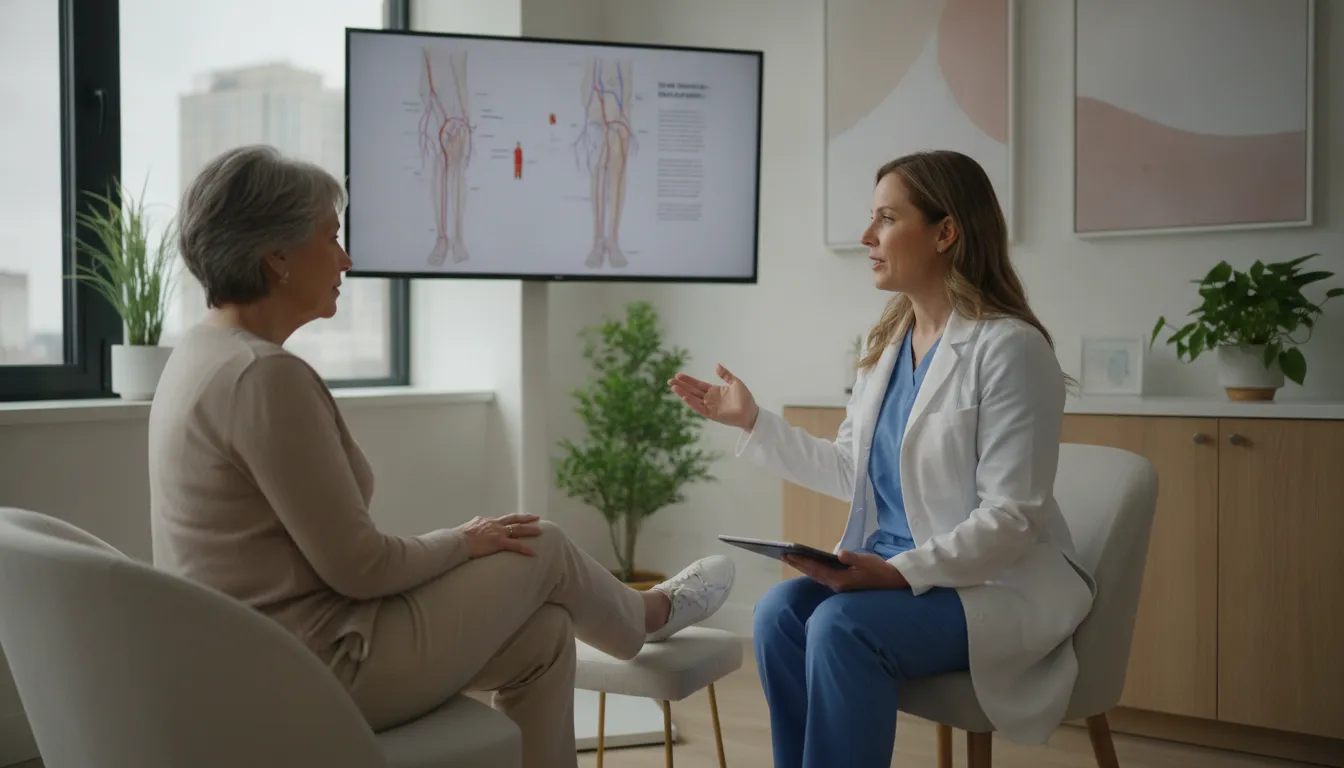
When you see new marks on your legs, you might wonder about the cause. A vein doctor can help you tell the difference between spider veins vs varicose veins. This check helps find out if the marks are just on the skin or if they show a deep health issue. At NJ Vein Specialists, we use a clear process to find the root of your vein issues.
Your visit starts with a talk about your health and your daily life. The doctor will ask when you first saw the veins and if they hurt. We also look at your risk factors like your job or family history. Many treating spider and varicose veins plans start with this full look at your health.
This talk helps the doctor know which tests you need next. We want to make sure you feel at ease while we find the best path for your care. Our team in Glen Rock and Edison focuses on your comfort from the start.
A key part of the check is the Blood Flow Mapping and Circulation Ultrasound. This test is the most common way to check the blood flow in your legs. It uses sound waves to create a map of your veins on a screen. This map shows the doctor if your vein valves are working as they should.
This test is done right in our office for your ease. It tells us if you have a condition called chronic venous insufficiency. This means your veins have trouble sending blood from your legs back to your heart. Finding this early helps us stop more issues from starting.
The doctor also checks the skin on your legs for changes. They look for swelling, skin color changes, or sores. These signs can help tell the difference between mild spider veins and more serious varicose veins. A physical check is a vital step before we start any care.
We want to find the best way to help you feel better. By looking at all the signs, we can pick the right care for your needs. This process makes sure that we treat the cause, not just the look of the veins.
There is no single best treatment for every visible vein. Your physician considers the vessel size, location, symptoms, ultrasound findings, health history, and personal goals. A plan may focus on a surface vein, an underlying source of venous pressure, or both.
Sclerotherapy is a minimally invasive option that may be used for spider veins and some small varicose veins. A physician injects a solution into the selected vessel so it can close. Laser Therapy may also be considered for certain small surface veins.
The right method depends on factors such as vein size, skin type, location, and treatment goals. More than one visit may be recommended. Your physician can explain the expected process, aftercare, and limits of each option before you decide.
When varicose veins are linked with a poorly working source vein, care may first address that source. Options can include Vein Ablation, VenaSeal, or Varithena, depending on the findings. Phlebectomy may be considered for selected bulging surface veins.
Compression Therapy and daily movement may also be part of a care plan. These steps can support comfort and circulation, but they do not replace an evaluation when symptoms persist or worsen. Treatment recommendations should be personalized rather than based only on what a vein looks like.
Ask which vein is being treated, what the evaluation found, and why a specific option fits your needs. You can also ask about preparation, aftercare, activity limits, and whether follow-up imaging is recommended. Clear answers help you make an informed choice.
NJ Vein Specialists offers concierge-style care with on-site diagnostics and minimally invasive treatment options. Patients can request care at the Glen Rock location or the Edison location. Weekend procedure availability and same-day scheduling may provide added convenience when appropriate.
Spider veins and varicose veins affect different sizes of vessels, so a spider vein does not simply grow into a varicose vein. A person can develop both, and shared risk factors or an underlying vein issue may contribute to their appearance.
Not always. Spider veins often occur near the skin and may be mainly cosmetic. However, they can sometimes appear with deeper vein problems, especially when leg pain, heaviness, swelling, or other symptoms are present. An evaluation can clarify the cause.
Consider a consultation when visible veins cause discomfort, keep changing, or affect your confidence. Prompt medical guidance is important for sudden swelling, warmth, redness, marked pain, bleeding, skin changes, or a wound that does not heal.
A specialist reviews your symptoms and health history, then examines your legs. Blood Flow Mapping and Circulation Ultrasound may be used when deeper circulation needs to be assessed. These steps provide more information than appearance alone.
Coverage depends on your PPO plan, your symptoms, the evaluation findings, and medical-necessity rules. Cosmetic care may not be covered. Confirm benefits and requirements with your insurer before treatment.
Visible veins can look similar even when their causes differ. If you are concerned about spider veins, varicose veins, or leg symptoms, NJ Vein Specialists can provide a personalized evaluation at its Glen Rock or Edison location.
Request a personalized consultation to discuss your concerns, diagnostic needs, and treatment options with a board-certified physician.