
Request a personalized vein consultation in Glen Rock or Edison to learn whether Varithena or sclerotherapy may fit your symptoms and ultrasound findings.
Varithena vs sclerotherapy is a common choice for New Jersey patients who want to address leg pain, swelling, or visible veins. Both treatments use injections to close damaged veins, but they are often selected for different vein patterns. Varithena uses a prescription microfoam and is commonly considered for larger varicose veins. Traditional sclerotherapy uses a liquid or physician-compounded foam and is commonly considered for spider veins and smaller surface veins. Only a clinician who reviews your health history and ultrasound findings can determine the appropriate option.
Knowing how these options compare can help you prepare for a productive consultation. The comparison below explains how evaluation, treatment experience, and recovery may differ.
Choosing the right way to treat your veins starts with knowing your options. Both Varithena and common sclerotherapy use a special medicine to close weak veins. This medicine is called a sclerosant. While they share a goal, they work in different ways to help you feel better. Only a trained doctor can tell which one fits your needs best.
The main gap between these two options is the size of the veins they treat. Standard sclerotherapy usually treats small spider veins and tiny varicose veins. It uses a liquid medicine to seal these small paths. Doctors often use this for looks to help your legs stay clear and smooth.
In contrast, Varithena prescription microfoam helps with larger issues. It can treat small, medium, and even large veins over 12 mm wide. This foam stays in place better than liquid does. Because it is a stable foam, it touches the vein wall for a longer time. This makes it a strong choice for deeper veins that cause pain or swelling.
Care is key to a safe plan. Doctors use ultrasound to guide every Varithena session. This tool helps them see deep veins that are hidden under the skin. It ensures the foam goes exactly where it needs to go. Clinical trials show this safe and effective approach helps many patients with vein symptoms.
Common sclerotherapy often relies on direct sight. A doctor looks at the spider veins on your skin and injects the liquid. This works well for veins near the surface. Since these veins are easy to see, ultrasound is not always needed. Both methods are quick and take place in our comfortable office rooms.
| Feature. | Varithena. | Sclerotherapy. |
|---|---|---|
| Formulation. | Prescription polidocanol injectable microfoam. | Liquid or physician-prepared foam sclerosant, depending on the plan. |
| Typical use. | Certain symptomatic varicose veins. | Often spider veins and other superficial veins. |
| Evaluation and guidance. | Duplex ultrasound may help assess and guide treatment. | Visual assessment or ultrasound may be used, based on the target vein. |
| Plan. | Chosen after a clinician evaluates the vein pattern and symptoms. | Chosen after a clinician evaluates the vein pattern and goals. |
| Aftercare. | Walking, activity, compression, and follow-up instructions are individualized. | Walking, activity, compression, and follow-up instructions are individualized. |
The best choice for you depends on your health goals and vein patterns. At NJ Vein Specialists, we use a custom model to find your best path. Our team uses tools like Blood Flow Mapping to plan your care. This helps us see which veins need foam and which need liquid.
We know every patient has unique needs. Some people need a quick fix for spider veins. Others seek relief from the deep leg pain of vein disease. Our expert doctors will talk with you to build a plan. We offer same-day booking and Saturday hours to make your care easy and fast.
Varithena is an FDA-approved prescription microfoam containing polidocanol. A clinician administers it into an incompetent vein so the treated vein can close and blood can redirect through healthier veins.
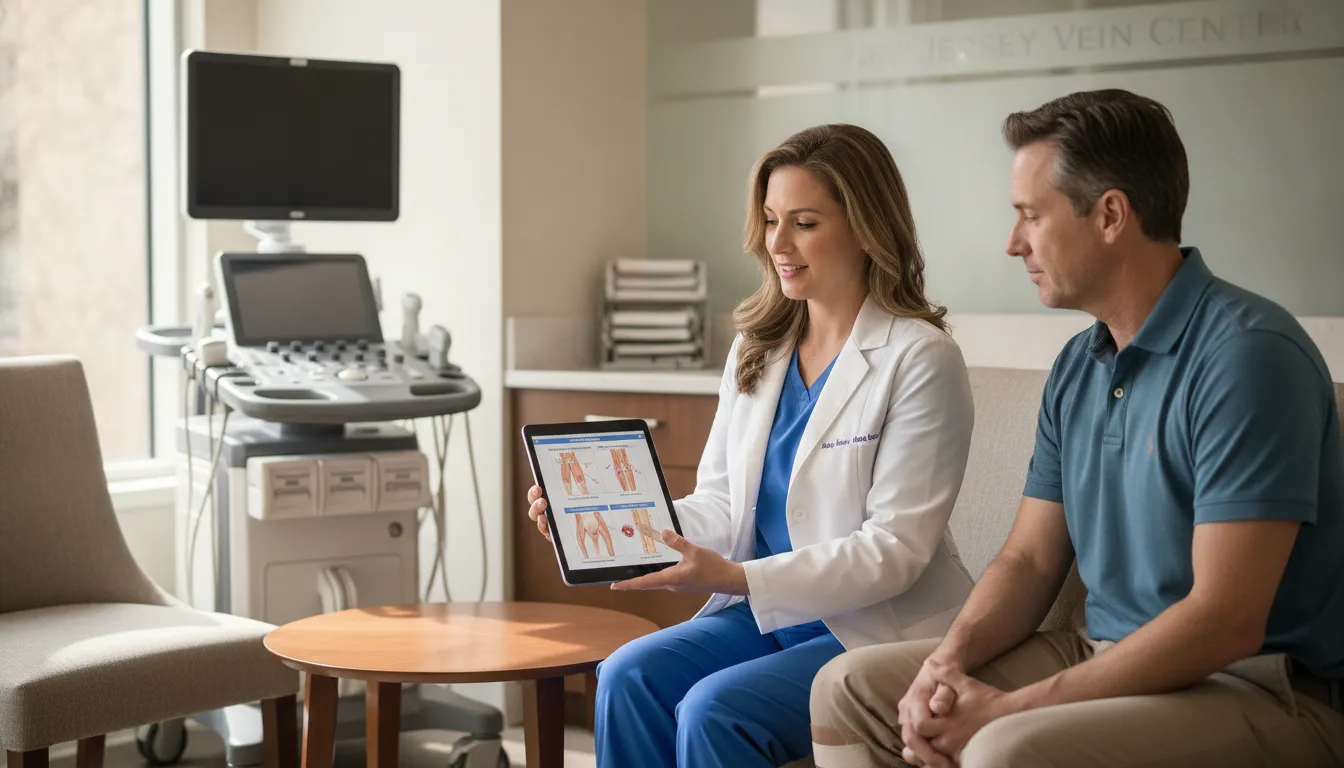
Varithena is a modern, FDA-approved treatment for varicose veins. It is a prescription microfoam made of a medicine called polidocanol. Doctors inject this foam directly into the damaged vein to help it close. This process reduces both the look of the vein and the pain it causes. At NJ Vein Specialists, our board-certified doctors use this tool to help patients find relief from leg pain. We offer this care in our Glen Rock and Edison offices to make it easy for you to get help.
Unlike some other vein care, Varithena uses a stable microfoam instead of a liquid. This is a big part of the Varithena vs sclerotherapy choice. In standard sclerotherapy, a liquid solution is used to treat small veins. Liquid can mix with blood and lose its strength. The microfoam in Varithena stays thick and fills the whole vein. This allows the medicine to touch the vein walls better.
The foam moves the blood out of the way instead of mixing with it. This helps the vein wall to collapse well. Once the vein closes, your body naturally sends blood to healthy veins nearby. This shift improves your blood flow and leg health. Most people feel better soon after the vein is closed. Our team makes sure you feel calm and safe during this short visit.
Varithena has a wide range of uses. The FDA approved it to treat small, medium, and large varicose veins. It can even work on veins larger than 12 mm in size. Clinical studies show that this microfoam is safe and works well for visible veins. It is a strong tool for those who want to avoid surgery.
Many patients seek this care to stop signs of vein disease. These issues often come from chronic venous insufficiency. Common signs include:
Your clinician will explain the number of injection sites, visit length, and aftercare before treatment. These details vary with the veins being treated and your health history. Learn more about Varithena prescription microfoam before your consultation.
Being exact is vital for a good result. Our doctors always use ultrasound to guide the foam into the right spot. This is different from some other methods that only use what the doctor can see by eye. Using Blood Flow Mapping and Circulation Ultrasound allows us to see deep inside the leg. We can find the exact source of the vein problem before we start. This helps us make a plan that is just for you.
By watching the foam on a screen, we make sure it goes right where it is needed. This careful step helps us avoid healthy veins and focus only on the ones that cause trouble. Research shows that this level of care helps many patients get better results. We focus on both safety and comfort in every step. You can compare vein treatment options with our experts during your visit.
Traditional sclerotherapy is a common, very simple way to treat vein issues. It has been used for many years to help people improve the look and health of their legs. During the process, a doctor uses a small needle to put a liquid fluid into a vein. This fluid causes the vein to close and in time fade away. While newer options exist, this method remains a top choice for many patients.
Most basic treatments use a liquid fluid. This clear liquid works well for very small veins that sit close to the skin surface. Sometimes, a doctor will mix the liquid with air or gas to create a foam. This is often called doctor-made foam. This foam covers a larger area inside the vein than plain liquid. It allows the doctor to treat slightly larger veins with more control. When looking at Varithena vs sclerotherapy, the type of foam is a main point. While doctors make their own foam in the office, other treatments use a premixed foam.
Studies show that both liquid and foam ways are safe and work well for many people. A review on vein treatments found that foam can be very helpful for certain vein types. Your doctor will choose the best fluid based on your own needs and the size of your veins.
This method is usually the best fit for spider veins and small reticular veins. Spider veins are tiny, red or blue lines that look like a web. Reticular veins are slightly larger and sit just below the surface. Because these veins are small, a doctor can often find and treat them by looking at the skin. This is different from larger veins that may need ultrasound to find the right spot. Traditional sclerotherapy is a great way to clear up these small veins and improve how your legs look.
Most patients seek this care for the look of their legs. However, clearing these veins can also help with mild itching or burning. It is key to know that this tool is not for every vein. Larger, bulging varicose veins often need a different plan. Your care team will check your legs to see if this is the right path for you.
The treatment usually takes about 30 minutes. It is done right in the office, and you do not need to be put to sleep. You may feel a small pinch or a mild sting when the needle goes in. Most people find the process very easy to handle. After the visit, you can usually walk out and get back to your day right away. You do not need a long rest period or time off work.
You will likely need to wear tight socks for a few days. This helps the treated veins stay closed so they can heal. You should also stay out of the sun for about a week. This prevents skin spots while the area heals. Most people see full results in a few weeks or months. Some may need more than one visit to get the best look. We focus on your comfort and time, making sure you receive custom care during your visit.
Choosing between **Varithena vs sclerotherapy** is a choice your doctor will make with you. There is no single best way to treat every vein. Instead, your doctor looks at your unique case to find the right fit. This path helps you get the best results with the least risk.
The size of your vein is a big factor. Doctors often use traditional sclerotherapy for small spider veins. This liquid solution works well for tiny veins near the skin. It can make these small red or blue lines fade quickly.
But larger veins often need a different plan. Varithena prescription microfoam is made for medium and large veins. It can even treat veins that are more than 12 mm wide. The foam fills the vein and stays in place better than a liquid does. This helps the medicine work on the vein wall for a longer time.
Your symptoms also help guide the plan. If you want to fix how your legs look, sclerotherapy is a top pick. It is very good at clearing away spider veins. But if you have pain or swelling, you may need a medical fix.
Your doctor reviews many things before picking a treatment:
Varithena helps people who have leg pain and heaviness. It targets the root cause of these symptoms. Research shows that Varithena is effective for people with visible vein issues. Your doctor will talk with you about all of these facts to ensure a safe path forward.
A clear map of your veins is needed for a safe plan. At NJ Vein Specialists, doctors use Blood Flow Mapping. This special ultrasound shows how blood moves in your legs. It helps find deep vein issues that a person cannot see from the outside.
This tool lets your doctor see which veins are not working and which ones are healthy. For Varithena, ultrasound is always used during the treatment. This helps the doctor see the foam as it moves in real time. It makes sure the foam goes exactly where it needs to go. For sclerotherapy, the doctor often uses their eyes and special lights to guide the needle. Both ways focus on your comfort and health.
Seeking help for vein issues is a big step toward better health. At our Glen Rock and Edison offices, we make the process clear and simple. We want you to feel at ease from your first visit through your treatment day. Our team focuses on giving you personal care in a calm setting.
Our concierge style model means we value your time and comfort. We offer same-day booking and weekend hours to fit your busy life. From the moment you walk in, our board-certified doctors handle every part of your care. We treat every patient like a person, not just a case.
Your journey starts with a full check of your leg health. We use a tool called Blood Flow Mapping to see how blood moves through your veins. This on-site ultrasound helps us find the root cause of your pain or swelling. It is a key part of making a plan that fits your needs.
During this visit, our doctors will talk with you about your goals. They will look at your veins and explain what they find. Whether you need Varithena or sclerotherapy, we make sure you know the reason for our choice. We also help you check if your PPO insurance covers the cost of your care.
Most vein treatments are quick and take place right in our office. You do not need to go to a hospital or stay overnight. When choosing between Varithena vs sclerotherapy, our experts look at the size of your veins. Both Varithena prescription microfoam and traditional sclerotherapy use small needles. This keeps your visit quick and helps you heal fast.
Research shows that these methods are safe and work well for many people. For example, a study on FDA-approved microfoam shows it helps with how your legs look and feel. Most patients can walk and return to their daily tasks right after the session.
After your visit, you can get right back to your day. You may need to wear compression stockings for a short time to get the best results. We will schedule a follow-up to check your progress and make sure your legs are healing well. Our team is always here to answer questions as you recover.
We pride ourselves on offering modern care with a personal touch. If you have questions about your recovery, just give us a call. We want to see you back on your feet and feeling great as soon as possible. Your health and comfort are our top goals at every stage.
Recovery after either treatment is usually centered on walking, following individualized activity instructions, and attending recommended follow-up visits. Compression needs and restrictions can differ by treatment and patient.
Both treatments allow most people to return to their daily routine right away. Because they are minimally invasive, you will not need a long rest period. Patients often find that both Varithena prescription microfoam and sclerotherapy provide a quick and simple path to better leg health. At NJ Vein Specialists, our board-certified doctors focus on your comfort during every step of the process.
Movement is a key part of the healing process for both procedures. You should plan to walk for at least 10 to 30 minutes each day after your visit. Walking helps keep blood moving through your legs and prevents clots. While light activity is good, you should avoid heavy lifting or hard exercise for about one week. Most patients can go back to work the same day or the next day, depending on the number of veins treated.
Your doctor will give you clear steps on how to care for your legs. You may need to wear tight socks for a few days or weeks. These socks help your veins stay closed as they heal. In some cases, sclerotherapy patients should stay out of the sun for a week. Sunlight can cause dark spots on the skin where the shots were made. Follow-up visits are also a normal part of your care to check that the veins are closing well.
You may see some mild bruising, swelling, or redness where the shots were given. These effects are common and usually go away on their own within a few days. But you must watch for signs that need medical care. Call your doctor if you have sudden chest pain, trouble breathing, or severe leg swelling. These can be signs of a rare but serious issue. Most people have a smooth Varithena recovery without any major problems. Research shows that Varithena is a safe treatment for visible varicose veins.
Yes, many people get both Varithena and liquid sclerotherapy as part of one care plan. Vein disease often affects many types of veins in your legs at the same time. For example, you may have large, deep veins that cause pain and small spider veins on the skin. Because of this, a doctor may use more than one tool to give you the best results.
Doctors often use a multi-step path to fix vein issues. In many cases, the goal is to fix the main problem while also helping your legs look better. When you think about Varithena vs sclerotherapy, it is often not a choice of one or the other. For the larger, deeper veins that cause pain or swelling, doctors often choose Varithena prescription microfoam. This is a special foam that is very good for closing larger veins.
Once the larger veins are closed, the doctor may focus on the smaller spider veins. This is where traditional sclerotherapy is often the best choice. It uses a liquid to clear up thin, red, or purple veins near the skin. Research shows that using these two methods helps patients find relief from pain and also helps their skin look clear. Clinical data in PubMed Central supports the safety and success of these modern vein treatments.
Your care may happen over a few visits rather than all at once. This staged path lets your legs heal between steps. Our board-certified doctors use new tools like Blood Flow Mapping to plan these steps. This ultrasound test helps find the source of your vein issues so we can treat them in the right order.
By treating the larger "feeder" veins first, doctors can often lower the pressure in your smaller veins. This makes the next steps easier and helps you heal faster. Both Varithena and liquid sclerotherapy are quick visits that take less than one hour. You can usually go back to your day right after your visit. This makes it easy to finish your plan even if you have a busy life.
When a vein issue causes pain, swelling, or other health problems, insurance often pays for the cost. We accept most PPO insurance plans for care that meets medical needs. However, every plan is different. Some may pay for Varithena to treat pain but view liquid sclerotherapy as a choice for looks only.
It is wise to check with your plan before you start. Our team can help you understand your benefits during your first visit. We will look at your symptoms and the results of your ultrasound to see what your insurance may cover. We care about clear talk so you know what to expect. This helps you focus on getting the care you need for healthy, pain-free legs.
Standard sclerotherapy and Varithena both treat veins but use other types of medicine. Regular sclerotherapy uses a liquid to close small veins. In contrast, Varithena uses a stable microfoam. This foam stays in contact with the vein wall longer than liquid does. Based on data from NJ Vein Specialists, this makes the microfoam a better choice for larger veins. Both treatments are quick. They happen in the office with very little pain or downtime.
Doctors often use standard liquid sclerotherapy to treat small spider veins and tiny blue reticular veins. It works well for these surface issues. However, Varithena is better for larger varicose veins. Your vein specialist will evaluate the size, location, and source of the affected veins before recommending a treatment. While both methods are useful, your doctor will pick the one that fits your vein size. This ensures the best results for your health and the look of your legs.
Yes, doctors always use ultrasound to guide Varithena treatments. This tool helps the doctor see the deep veins that are not visible on the skin. It ensures the microfoam goes exactly where it is needed for the best results. Standard liquid sclerotherapy often relies on what the doctor can see with their eyes. Using ultrasound mapping helps make the treatment safe and exact. These tools help your doctor find the root cause of your vein pain.
Many insurance plans cover Varithena when a doctor says it is a medical need. This often happens when veins cause pain or swelling. According to NJ Vein Specialists, they accept many PPO insurance plans for these treatments. You should always check with your insurance firm first to confirm your coverage. A visit can help find if your vein issues meet the rules for medical care. This helps you plan for any costs you might pay yourself.
If you do not fix your vein issues now, they will get worse and could lead to sores or clots that are hard to fix. Waiting for your care means you will have to deal with heavy and tired legs for much longer than you need to in life. Choosing to start your Varithena prescription microfoam care now ensures you feel much better and can stay active in just a few short weeks.
Are you ready to take the first step toward having legs that feel light and healthy again? Contact our team today to request a vein consultation and find the right fix for your own leg health needs.